Equipment Introduction:Tube bundle dryer is a continuous drying equipment widely used in industries such as chemical, food, a
Click to consult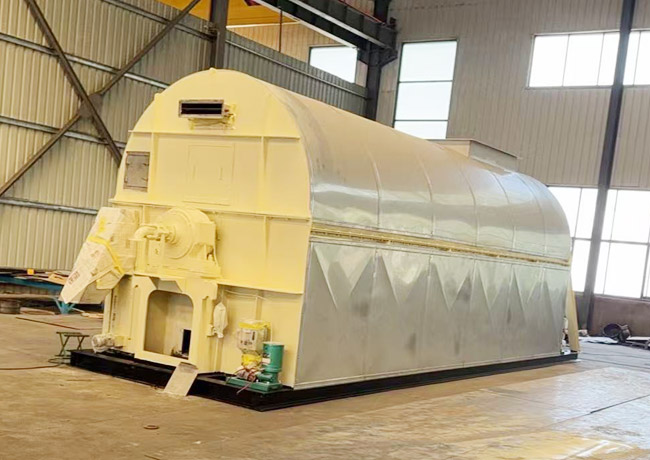
Equipment Introduction:
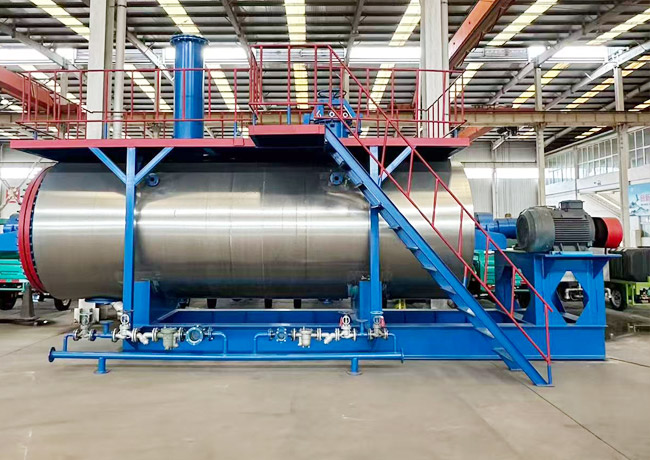
Tube bundle dryer is a continuous drying equipment widely used in industries such as chemical, food, and feed. It adopts indirect heating and supports both forward and backward flow processes.
Core structure:
It consists of a host rotor system (including hollow shaft, tube bundle or disc structure), a transmission system (driven by variable frequency motor), a pipeline system, and an exhaust and dust removal system. The rotor is driven by a variable frequency motor to achieve energy-saving operation, with a cylinder wall thickness of 12-18 millimeters and wear-resistant and corrosion-resistant properties.
Working Principle:
Heat is transferred through the steam heating tube wall, and the material is stirred and moved by a shovel plate in a closed negative pressure environment. Moisture is discharged through a dehumidification fan. The heat consumption is about 1.5-2 kilograms of steam per kilogram of water evaporated, which reduces electricity consumption by 30% compared to traditional equipment.
Scope of application:
Suitable for loose and high moisture materials such as corn germ, distiller's grains, protein feed, etc. Typical applications include starch by-products, polymers (such as polyvinyl chloride, polypropylene), industrial sludge, etc.
Features:
Energy saving and environmental protection: The thermal efficiency reaches 80% -90%, and the processing capacity is large (the processing capacity per unit volume is three times that of ordinary dryers)
Flexible operation: supports continuous or intermittent production, adjustable material retention time (30-60 minutes)
Environmental protection and low consumption: Closed system reduces pollution, with power consumption only 25% of fluidized bed dryers
Wide applicability: Suitable for non stick materials such as particles, fibers, powders, etc., compatible with various heat sources such as steam and thermal oil

 CN
CN